

✅ What You’ll Learn from This Article!
✨ The latest treatments that require no hospitalization and allow you to notice results promptly
✨ Surgical methods designed to minimize scarring
✨ Treatment options suited to your level of underarm odor
✨ Self-care measures you can start right away
⚠️ Why You Can’t Afford to Skip This
Without knowing the right treatment options, you may continue spending time and money on measures that offer little benefit. Treatment technology has advanced, and there are now methods that can be performed with minimal disruption to daily life.
A Complete Guide to Recommended Underarm Odor Treatments in Saitama (Omiya Station)
This page provides medically supervised information reviewed by specialist physicians at IC Clinic Omiya, located just a 1-minute walk from the East Exit of JR Omiya Station.

💡 Causes of Underarm Odor (Axillary Osmidrosis) and Treatment Options by Odor Severity
🤔 Are you worried that you might have underarm odor (axillary osmidrosis)?
Axillary osmidrosis is not visible to the eye, and it can be difficult to notice the odor yourself. As a result, you may unknowingly be causing discomfort to colleagues or family members without realizing it.
👉 Learn more about the characteristics and symptoms of axillary osmidrosis
🏥 What Is Underarm Odor (Axillary Osmidrosis)? | A Condition Causing Strong Underarm Odor Due to Sweat Secreted by the Apocrine Glands
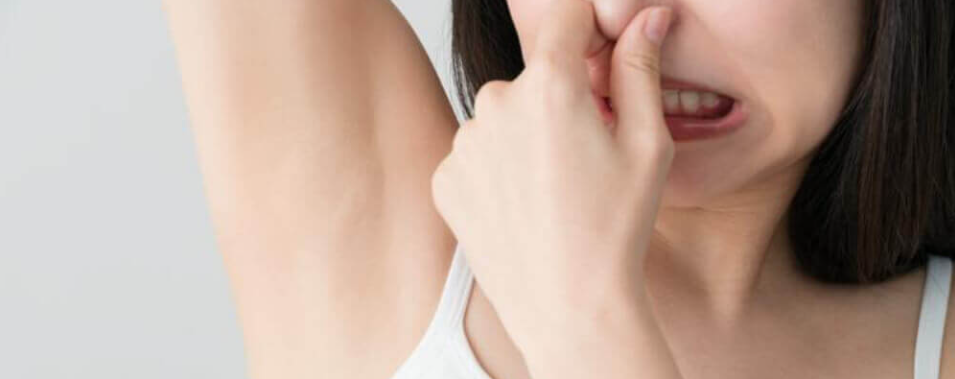
Axillary osmidrosis refers to the condition of unpleasant odor emanating from the underarms.
Formally defined as axillary osmidrosis, it is characterized by a strong odor that can be detected even without raising the arms.
The odor originates from the oxidation of sweat produced by the apocrine sweat glands in the underarms. Because perspiration intensifies the odor, symptoms tend to be more noticeable in summer, after exercise, or in other situations where sweating occurs.
The condition often first appears around puberty, and in many cases the symptoms become less noticeable with age.
📊 Axillary osmidrosis is estimated to affect approximately 10% of the Japanese population — a relatively low proportion globally — yet many people are bothered by the characteristic odor, and a wide range of products aimed at managing it have become available.
However, research into axillary osmidrosis treatment has advanced, and in recent years treatment has enabled significant improvement in most cases.
👉 Is axillary osmidrosis contagious? A physician explains the truth behind the rumor
👃 What Does Axillary Osmidrosis Smell Like? Characteristic Symptoms Explained
The odor associated with axillary osmidrosis is often described in the following ways:
🔸 A sulfur-like smell
🔸 A spicy, pungent smell reminiscent of strong seasonings
🔸 A sharp smell similar to onions
🔸 A smell resembling pencil lead
If you notice an odor with these characteristics, there is a possibility you may have axillary osmidrosis.
✅ Self-Check Items
The more of the following physical signs that apply to you, the higher the likelihood of axillary osmidrosis:
☑️ Wet or moist earwax
☑️ Yellowing of underwear or clothing
☑️ One or both parents have axillary osmidrosis
☑️ Excessive underarm sweating
If you are concerned about whether you have axillary osmidrosis, start by checking how many of the above items apply to you.
👉 Learn more about how to self-check for axillary osmidrosis
🔬 Why Does Axillary Osmidrosis Cause Odor?

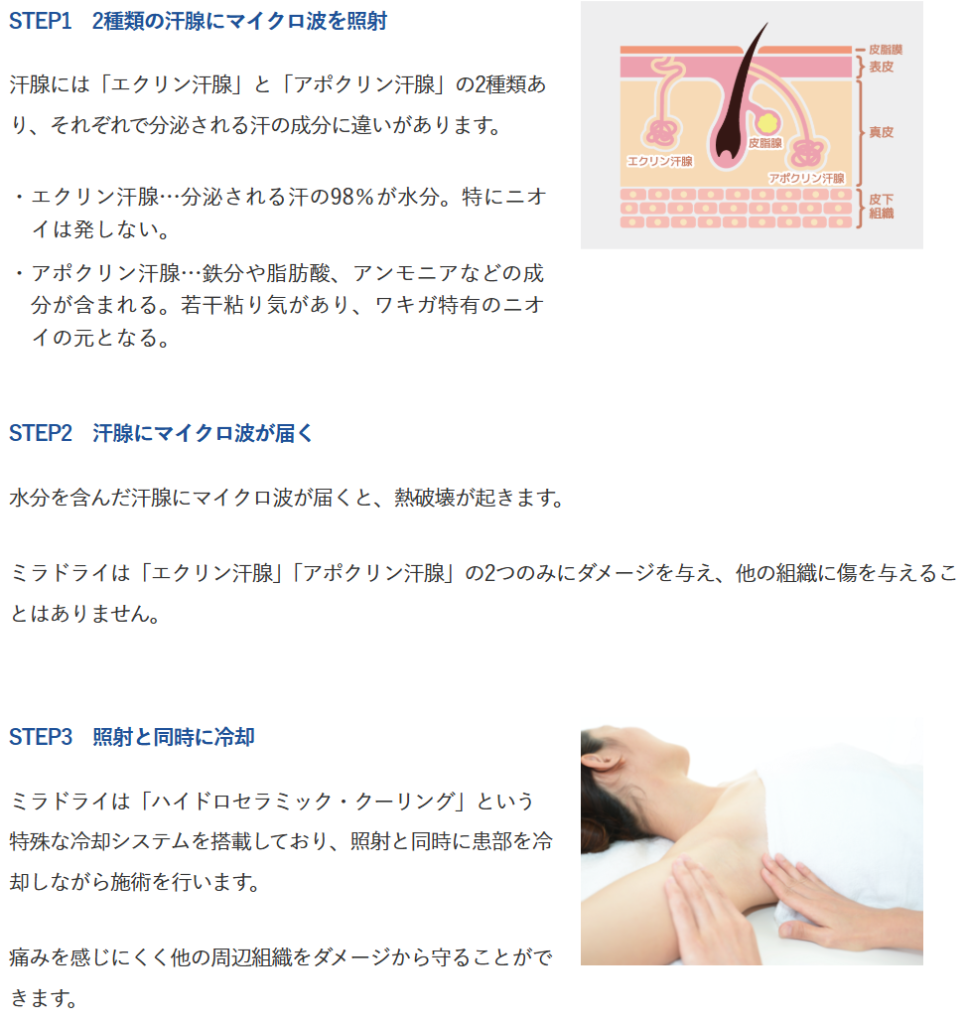
Sweat secreted by the apocrine glands contains components such as iron, fatty acids, and ammonia, giving it a slightly viscous quality and making it the primary source of the distinctive odor associated with axillary osmidrosis.
Sweat glands are divided into apocrine glands and eccrine glands, and the composition of the sweat they produce differs between the two.
💧 Sweat from the eccrine glands is approximately 98% water and produces little to no odor.
Apocrine glands, on the other hand, secrete sweat that contains fatty acids. These fatty acids are broken down by bacteria on the skin into shorter-chain fatty acids, eventually converting into 3-methyl-2-hexenoic acid.
⚠️ The substance known as “3-methyl-2-hexenoic acid” is considered to be responsible for the odor characteristic of axillary osmidrosis.
👂 The Relationship Between Axillary Osmidrosis and Earwax
Moist earwax is considered an indicator of a higher likelihood of axillary osmidrosis.
The ear canal also contains apocrine glands — the same glands associated with axillary osmidrosis — and the number of these glands influences the consistency of earwax.
A greater number of apocrine glands leads to more secretion, which is why moist earwax may be associated with a higher likelihood of axillary osmidrosis.
If the earwax has a sticky, caramel-like texture, the possibility of axillary osmidrosis may be even higher.
However, even among people with moist earwax, the rate of axillary osmidrosis is estimated at around 80%, meaning moist earwax does not necessarily indicate the condition.
In particular, for women, the correlation between earwax type and odor severity is not as strong as it is for men.
Rather than relying on earwax alone, consider multiple factors when assessing whether you may have axillary osmidrosis.
👉 Learn more about the relationship between axillary osmidrosis and earwax
👉 Moist earwax but not axillary osmidrosis? How to tell the difference
🧬 What Causes Axillary Osmidrosis? Diet and Lifestyle Habits Also Play a Role

The causes of axillary osmidrosis involve both genetic factors and lifestyle habits.
The main causes can be grouped into the following three categories:
🔹 Inheriting a larger number of apocrine glands through genetics
🔹 Increased apocrine gland secretion due to the influence of sex hormones
🔹 Disrupted lifestyle habits, which can act as a trigger for the onset of axillary osmidrosis
Let’s look at each one in turn.
👉 Learn more about the causes of axillary osmidrosis and the role of genetics
🧬 Cause ①: Inheriting a Greater Number of Apocrine Glands Through Genetics
Inheriting a larger number of apocrine glands from one’s parents is one contributing factor.
It is well established that axillary osmidrosis can be inherited. If one parent has the condition, there is approximately a 50% chance it will be passed on to their child.
If both parents have axillary osmidrosis, the likelihood of inheritance rises to around 80%, indicating a significant genetic influence.
The greater the number of apocrine glands and the larger their size, the stronger the associated odor tends to be.
While inheritance is not guaranteed, if one or both parents have axillary osmidrosis, the probability that their child will also develop the condition is higher.
👉 Learn more about the genetics of axillary osmidrosis
🌟 Cause ②: Increased Apocrine Gland Secretion Due to Sex Hormone Influence
The amount of secretion from the apocrine glands is determined by their size and number, which in turn affects the intensity of odor.
Axillary osmidrosis most commonly develops around puberty, when shifts in sex hormone balance cause the apocrine glands to enlarge and become more active.
While the size and number of apocrine glands are determined by genetics, axillary osmidrosis does not typically manifest immediately after birth.
The age of onset varies from person to person; however, onset during puberty — when sex hormone levels are more likely to fluctuate — is particularly common.
💢 Cause ③: Disrupted Lifestyle Habits Can Act as a Trigger
Irregular lifestyle habits can also contribute to the onset of axillary osmidrosis.
When the body is under stress, the apocrine glands may be stimulated, leading to increased sweat secretion.
😰 Sweating when nervous — such as when speaking in front of others — is a familiar example of stress-induced perspiration that many people have experienced.
Furthermore, a lack of physical activity can make it harder for the body to sweat regularly, which may intensify underarm odor.
Without regular exercise, the body sweats less, allowing waste products to accumulate.
When sweating does eventually occur, these accumulated waste products are released all at once, which can result in a stronger odor.
👉 Learn more about the relationship between hyperhidrosis and stress
📊 Axillary Osmidrosis Severity Levels: Three Main Categories
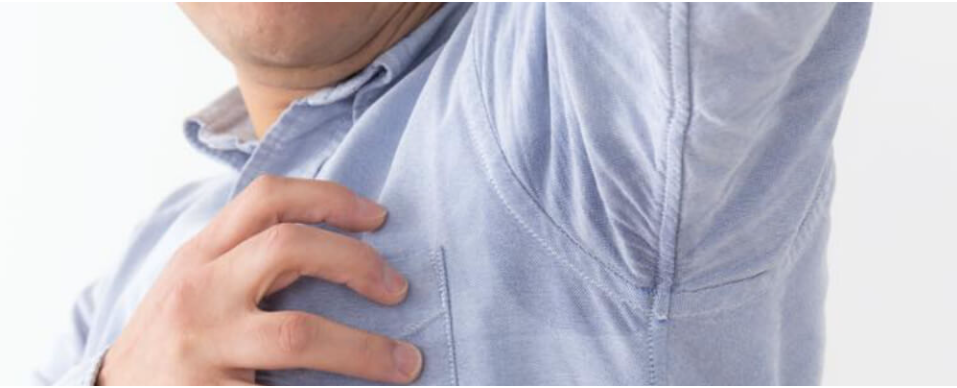
Axillary osmidrosis can be broadly classified into three severity levels, ranging from mild to severe.
The characteristics of each level are as follows:
🟢 Mild: Odor is only noticeable when the nose is brought close to the affected area
🟡 Moderate: Odor is detectable when in close proximity or in an enclosed space
🔴 Severe: Odor is strong enough for anyone entering the room to notice
If you are concerned about whether you may have axillary osmidrosis, use these descriptions to get a sense of where your symptoms might fall.
🟢 Mild: Odor Noticeable Only When the Nose Is Brought Close to the Affected Area
In mild cases, the odor is barely noticeable unless one gets close, and many individuals are unaware of it themselves.
For example, this level might describe someone who has never been told about the odor by others but notices a faint smell from their underarm when changing clothes and bringing their nose close to the area.
Over-the-counter antiperspirants can be helpful for managing mild symptoms, though those who are concerned may wish to consult a clinic sooner rather than later.
At this level, others are unlikely to find the odor unpleasant, and in most cases, only the person themselves is aware of it.
⚠️ Some individuals may worry more than necessary; in such cases, it is worth considering whether the concern might relate to a separate condition called “olfactory reference syndrome” — a tendency to believe others perceive an odor when they do not.
Counseling can help ease these concerns, so consulting a healthcare provider is worth considering.
Of course, medical treatment for axillary osmidrosis is also available, so if you are concerned, we recommend speaking with a physician.
🟡 Moderate: Odor Detectable When in Close Proximity or in an Enclosed Space
When odor is noticeable when getting close to someone or in an enclosed space, this falls into the moderate category.
For example, this level might describe a situation where a faint odor is perceptible when in a confined space such as a train carriage and in close proximity to others.
In moderate cases, some people nearby may notice the odor, but it is generally not clear who the source is.
As long as you are not in very close contact with others or frequently in enclosed spaces, others are unlikely to notice.
However, on a hot summer day when wearing light clothing, others nearby may find the odor uncomfortable.
Since moderate axillary osmidrosis can cause discomfort to those around you, it is worth considering treatment as appropriate.
✨ For mild to moderate cases, miraDry treatment is an option with relatively low physical burden.
👉 Learn more about miraDry treatment
🔴 Severe: Odor Strong Enough for Anyone Entering the Room to Notice
In severe cases, the odor is strong enough for anyone entering the room to notice.
For example, if a strong odor is detectable even when wearing a jacket and without being in a crowded space, this is indicative of severe axillary osmidrosis.
The odor can permeate a room, causing discomfort to many, and in enclosed spaces particularly, a significant number of people are likely to notice it.
Over-the-counter products are generally insufficient to manage this level of odor, and prompt medical treatment is advisable.
Removing or destroying the apocrine glands responsible for the odor can help reduce it significantly.
💡 For concerns about underarm odor, please consult IC Clinic.
Living with the worry of axillary osmidrosis and constantly managing it can be exhausting.
IC Clinic offers free consultations for underarm odor treatment.
We propose treatment approaches suited to a range of individual needs, such as “I want to minimize scarring” or “I want to see results as soon as possible.”
To find the treatment approach that is right for you and move toward relief from axillary osmidrosis concerns, we encourage you to take advantage of our free consultation.
💊 Three Types of Underarm Odor Treatment | Features and Approximate Costs
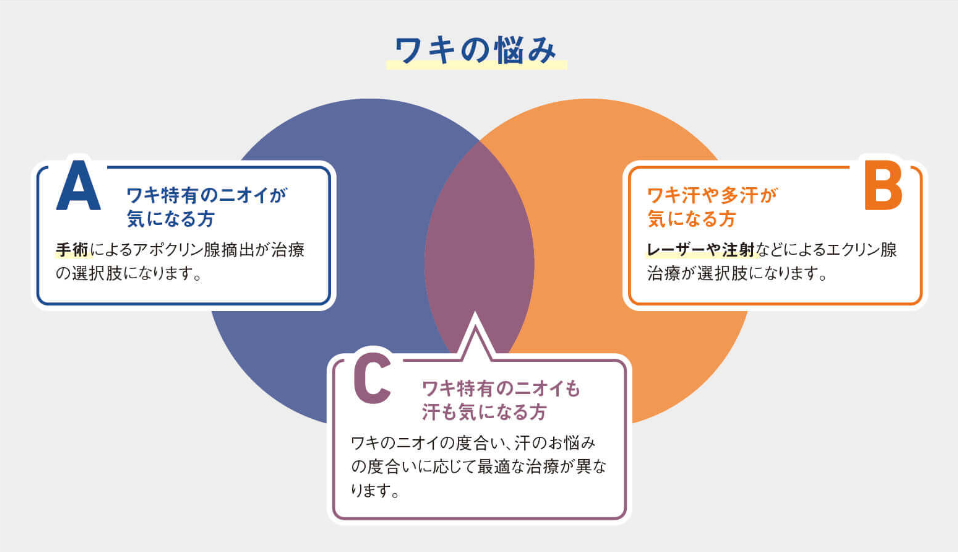
When focusing specifically on the underarm area, the appropriate treatment depends on whether you wish to address odor, excessive sweating, or both.
Each option has its own advantages and disadvantages, and costs can range widely from tens of thousands to several hundred thousand yen. It is therefore important to receive a consultation from an experienced physician and select the treatment approach that is right for you.
Here we explain three of the most common underarm odor treatment methods:
💉 Botox (botulinum toxin) injections
✂️ Surgical treatment
⚡ miraDry
👉 Learn more about the types and comparison of underarm odor treatments
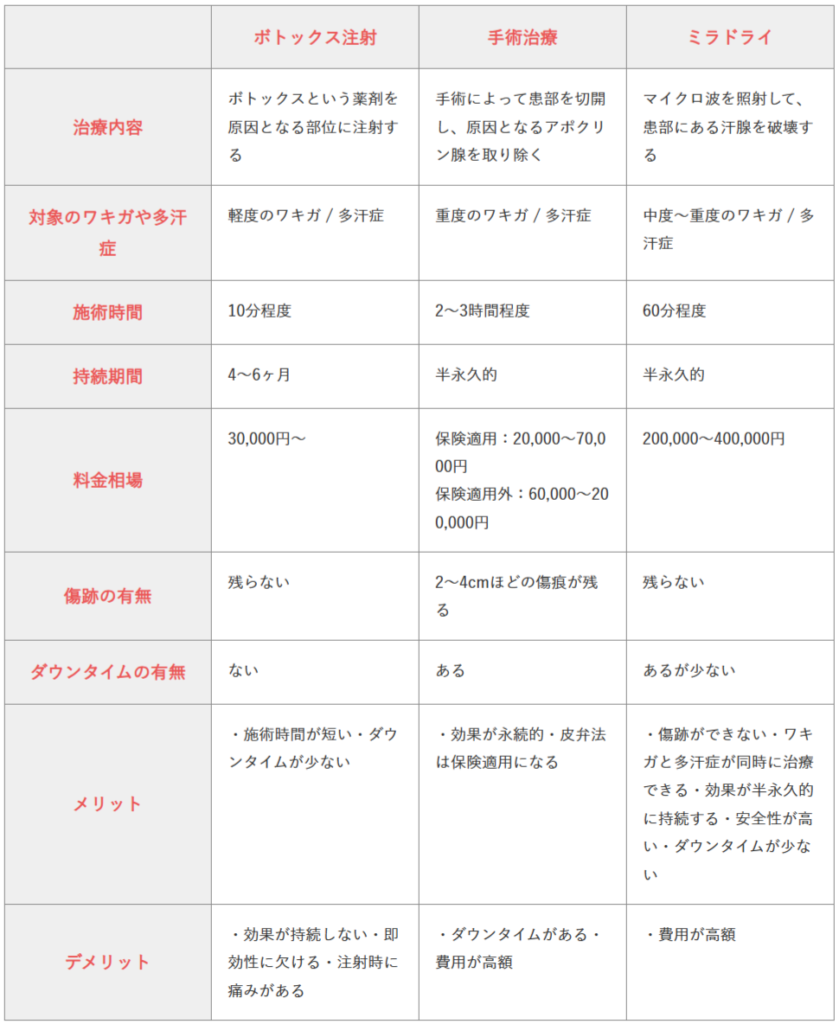
💉 Botox Injections: A Convenient Treatment Option for Those Seeking a Simple Approach
Botox injections require relatively little treatment time and are comparatively affordable, making them a convenient treatment option.
A medication is injected directly into the affected area to suppress nerve activity and reduce the amount of sweat produced.
✨ This treatment is well suited to those who want a straightforward option they can access when needed.
👉 Learn more about Botox treatment for axillary osmidrosis
👉 Effects and duration of Botox treatment for hyperhidrosis
👉 Is Botox treatment for hyperhidrosis covered by insurance?
✂️ Surgical Treatment (Excision Method): The Primary Option for Severe Cases
For patients with severe axillary osmidrosis, surgery is generally the first treatment to consider.
Surgical treatment can provide substantial improvement and has been performed for many years.
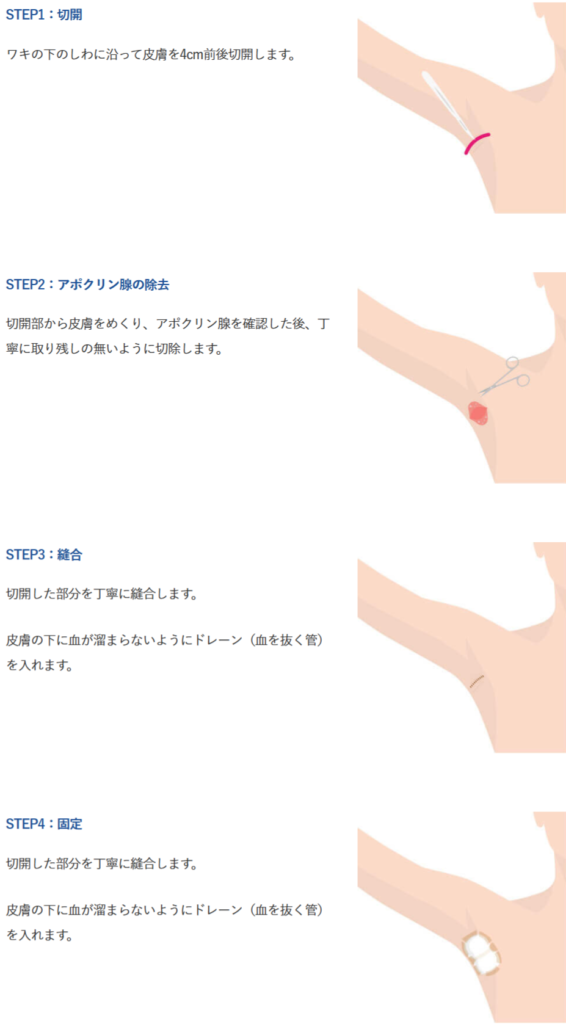
Several surgical techniques exist; at our clinic, we use the standard procedure known as the “excision method (skin-flap technique).”
After administering anesthesia, the affected area is surgically opened and the apocrine glands are directly removed.
👉 Learn more about the cost of axillary osmidrosis surgery
👉 Learn more about the downtime associated with axillary osmidrosis surgery
👉 How to choose a skilled surgeon for axillary osmidrosis surgery
⚡ miraDry: Non-Surgical Underarm Odor Treatment
miraDry involves minimal discomfort and is a treatment option that has been attracting attention for its potential to provide long-lasting results.
Microwave energy is applied to the underarm area to target and destroy the apocrine glands.
👉 Learn more about miraDry treatment
👉 Learn more about the effects of miraDry
👉 Learn more about the cost of miraDry
👉 Is miraDry covered by insurance? Find out here
💊 Temporary Management of Underarm Odor with Topical and Oral Medications

Topical and oral medications are also available as options for managing axillary osmidrosis.
However, these medications offer only temporary relief and do not address the underlying cause of axillary osmidrosis.
Medications may be prescribed by a physician or, in some cases, purchased at a pharmacy.
🧴 Topical Medications: Reducing Underarm Odor by Suppressing Perspiration
There are two main types of topical medications:
🔹 Those that help reduce sweating
🔹 Those that help suppress odor
Both types work by being applied directly to the affected area where sweating is most pronounced.
Topical antiperspirants typically contain aluminum chloride; as they may cause itching upon application, it is advisable to apply them using a tissue or similar material to limit contact to the target area.
Topical antibiotics are also effective. Applying them for 2 to 3 days to suppress odor can provide relief for approximately 1 to 2 weeks before reapplication is needed.
By reapplying the medication whenever symptoms return, axillary osmidrosis can be kept under control.
If topical medications alone are insufficient to manage odor, using oral medication in combination or wearing antibacterial clothing may also be helpful.
💊 Oral Medications: Reducing Underarm Odor by Inhibiting Acetylcholine
Oral medications containing anticholinergic agents work by inhibiting acetylcholine, thereby reducing the amount of sweat the body produces.
The dosing schedule will be determined in consultation with your physician, but typically requires taking the medication 3 to 4 times per day. Effects generally appear within about one hour of taking the medication, so timing your doses accordingly is helpful.
⚠️ One potential side effect of reducing sweating is a sensation of warmth in the body.
Long-term use may place a burden on the body, so for those seeking a more fundamental solution, treatments such as miraDry or surgery may be worth considering.
💰 Costs and Insurance Coverage for Underarm Odor Treatment
The cost of underarm odor treatment varies considerably depending on the method chosen. There are insurance-covered treatments as well as self-pay options, so it is important to check in advance.
👉 Learn more about insurance-covered treatments for axillary osmidrosis
👉 Learn more about the insurance coverage conditions for axillary osmidrosis treatment
👉 A detailed cost comparison of axillary osmidrosis surgery
👉 Is axillary osmidrosis treatment for children covered by insurance?
🏠 Self-Care Measures for Managing Underarm Odor

For those who want to address the root cause of axillary osmidrosis, medical treatment is recommended. However, if you are not yet in a position to pursue treatment — whether due to cost or a preference to try accessible measures first — the following approaches may help:
🚿 Shower frequently / wipe away sweat regularly
✨ Remove or reduce underarm hair
🧴 Use antiperspirants or deodorant products with antibacterial properties
Let’s look at each one in turn.
👉 Learn more about self-care measures for underarm odor
🚿 Measure ①: Shower Frequently / Wipe Away Sweat Regularly
Keep your body clean by showering regularly and wiping away sweat promptly.
Removing excreted waste products from the skin is an effective way to help reduce odor.
Showering is ideal where possible, but when you are out, thoroughly wiping the underarms — where sweat tends to accumulate — can also be sufficient.
Use clean handkerchiefs or wipes, and make sure to dry the area thoroughly — this is key.
Make a habit of wiping down whenever you notice perspiration.
✨ Measure ②: Remove or Reduce Underarm Hair
Moisture and heat trapped by hair can contribute to odor. Removing or reducing hair in the underarm and intimate areas helps prevent sweat from becoming trapped and causing that issue, so it is particularly advisable to address areas with dense hair growth.
Hair removal also makes it easier to wipe away sweat, helping you maintain cleanliness more consistently.
Hair removal creams suitable for intimate areas are rarely available over the counter, so undergoing hair removal at a clinic is recommended for safety.
🧴 Measure ③: Use Antiperspirants or Antibacterial Deodorant Products
Antiperspirants can be helpful for managing mild odor.
Antiperspirants are products that can temporarily help reduce sweating. Their appeal lies in how they can be used in targeted situations — such as during summer when sweating is more likely, or before exercise.
Deodorants are products that help reduce unpleasant odor by inhibiting the growth of odor-causing bacteria.
Furthermore, products that also contain antiperspirant ingredients can help reduce the amount of sweat at the same time.
Both types are readily available at pharmacies.
🔹 Roll-on type
🔹 Spray type
🔹 Sheet type
🔹 Cream type
These products come in various forms, but the roll-on type is generally recommended for close contact with the underarm. Oronine, which has antibacterial properties, is also a popular choice.
Many products contain fragrance, so choose one that suits your preferences.
🧼 Measure ④: Wipe with Alcohol-Soaked Cotton
Wiping the affected area with alcohol-soaked cotton can help inhibit bacterial growth and keep the area consistently clean.
If cotton is not available, tissues or antibacterial body wipes can also be effective.
Do not reuse the same cloth or wipe; always use a fresh one each time.
After wiping, put on clean clothing and try to prevent sweat from transferring back to the fabric.
🏥 For Underarm Odor Treatment in Saitama, Please Consult IC Clinic Omiya
If you are considering treatment for axillary osmidrosis in Saitama, please feel free to consult IC Clinic Omiya.
IC Clinic offers a range of treatments — including sweat-reducing injections, miraDry, and the skin-flap surgical technique — with options tailored to the severity of your condition.
We can suggest flexible treatment approaches to match a variety of needs, such as “I want to see results quickly,” “I want surgery but would prefer to minimize scarring,” or “I want treatment that won’t interfere with my daily routine.”
To find the treatment approach that suits you best, we encourage you to make use of our free consultation.
✨ Four Key Features of IC Clinic

📚 Axillary Osmidrosis Related Articles
For those who would like to learn more about axillary osmidrosis, please see the related articles below.
【Basic Knowledge of Axillary Osmidrosis】
- 👉 Characteristics and Symptoms of Axillary Osmidrosis | Self-Check Methods Explained
- 👉 How to Self-Check for Axillary Osmidrosis | Key Points for Assessing Your Own Symptoms
- 👉 Axillary Osmidrosis and Earwax | Is Moist Earwax a Sign of Axillary Osmidrosis?
- 👉 Moist Earwax but Not Axillary Osmidrosis? How to Tell the Difference
- 👉 Is Axillary Osmidrosis Hereditary? The Genetics and How to Address It
- 👉 Causes of Axillary Osmidrosis and Genetics | A Physician Explains Why It Develops
- 👉 Is Axillary Osmidrosis Contagious? A Physician Explains the Truth Behind the Rumor
【Axillary Osmidrosis Treatment Options】
- 👉 Types and Comparison of Axillary Osmidrosis Treatments | How to Choose the Right Option for You
- 👉 Axillary Osmidrosis Management Guide | From Self-Care to Medical Treatment
- 👉 Botox Treatment for Axillary Osmidrosis | Effects and Duration Explained
- 👉 How to Choose a Skilled Surgeon for Axillary Osmidrosis Surgery | Tips for Finding the Right Clinic
- 👉 How Long Is the Downtime for Axillary Osmidrosis Surgery? Explained by Treatment Type
【Costs and Insurance for Axillary Osmidrosis Treatment】
- 👉 Insurance-Covered Treatment for Axillary Osmidrosis | Eligible Treatments and Conditions Explained
- 👉 Insurance Coverage Conditions for Axillary Osmidrosis Treatment | Criteria for Receiving Covered Care
- 👉 Axillary Osmidrosis Surgery Costs | Insurance Coverage Conditions Also Explained
- 👉 A Detailed Cost Comparison of Axillary Osmidrosis Surgery | Estimated Fees by Treatment Type
- 👉 Is Axillary Osmidrosis Treatment for Children Covered by Insurance? Treatment Options and Costs Explained
【For Those Looking for Axillary Osmidrosis Treatment in Omiya】
【For Those Looking for Axillary Osmidrosis Treatment Across Saitama Prefecture】
- 👉 For Those Seeking Axillary Osmidrosis Treatment in the Saitama-Shintoshin Area
- 👉 For Those Seeking Axillary Osmidrosis Treatment in the Yono Area
- 👉 For Those Seeking Axillary Osmidrosis Treatment in the Urawa Area
- 👉 For Those Seeking Axillary Osmidrosis Treatment in Ageo
📚 Hyperhidrosis Related Articles
Many people experience both axillary osmidrosis and hyperhidrosis. For those who would like to learn more about hyperhidrosis, please see the related articles below.
【Basic Knowledge of Hyperhidrosis】
- 👉 How to Self-Check for Hyperhidrosis | How to Identify Your Symptoms
- 👉 Hyperhidrosis and Stress | Causes and Management of Stress-Induced Sweating
- 👉 Which Department Should I See for Hyperhidrosis? Guidance by Symptom Type
- 👉 Is Excessive Sweating a Sign of Hyperhidrosis? Causes and Treatment Explained
- 👉 Severe Sweating on the Head and Face… Causes and Management of Craniofacial Hyperhidrosis
【Hyperhidrosis Treatment Options】
- 👉 Types of Hyperhidrosis Surgery | Advantages and Disadvantages by Treatment Method
- 👉 Botox Treatment for Hyperhidrosis | Effects and Duration in Detail
- 👉 Is Botox Treatment for Hyperhidrosis Covered by Insurance? Conditions and Costs Explained
- 👉 Insurance Coverage for Hyperhidrosis Treatment | Eligible Treatments and Conditions
📚 miraDry Related Articles
For those who would like to learn more about miraDry — the non-surgical treatment for axillary osmidrosis and hyperhidrosis — please see the related articles below.
【Effects of miraDry and How It Works】
- 👉 About miraDry Treatment | Non-Surgical Axillary Osmidrosis and Hyperhidrosis Treatment in Omiya
- 👉 A Full Explanation of miraDry’s Effects | Improvement Rates and Duration for Axillary Osmidrosis and Hyperhidrosis
- 👉 Is miraDry Ineffective for Axillary Osmidrosis? A Physician Explains the Causes and How to Maximise Results
- 👉 When Can You Expect to Notice Results from miraDry? The Timeline Explained
- 👉 A Physician’s Detailed Explanation of How miraDry Works
【miraDry Costs and Insurance】
- 👉 miraDry Cost Ranges and Why Prices Vary | Including Guidance on Medical Expense Deductions and Choosing a Clinic
- 👉 Is miraDry Covered by Insurance? How to Use Medical Expense Deductions to Reduce Costs
【Addressing Concerns Before miraDry Treatment】
- 👉 7 Reasons People Regret miraDry | What to Know Before Treatment, Reviewed by a Physician
- 👉 7 Drawbacks of miraDry | A Physician Explains Side Effects, Limitations, Costs, and More to Help You Make an Informed Decision
- 👉 Has Anyone Died from miraDry? A Physician’s Thorough Explanation of the Facts and Safety
- 👉 Did Odor Get Worse After miraDry? A Specialist Explains the Causes and What to Do
- 👉 Is miraDry “Ineffective”? A Physician’s Explanation for Those Considering Treatment in Omiya
【miraDry Treatment for Children】
- 👉 Axillary Osmidrosis and Hyperhidrosis Treatment for Children | From What Age Can miraDry Be Performed?
- 👉 Is miraDry Effective for Middle School Students with Axillary Osmidrosis or Hyperhidrosis? What to Know Before Considering Treatment in Omiya
【For Those Seeking miraDry in Saitama】
- 👉 For Those Seeking miraDry in Ageo | Non-Surgical Axillary Osmidrosis and Hyperhidrosis Treatment Available in Omiya
- 👉 For Those Living in the Urawa Area | A Guide to miraDry Treatment for Axillary Osmidrosis and Hyperhidrosis
- 👉 For Those Considering miraDry in the Yono Area | A Specialist’s Full Explanation of the Features and Effects of Axillary Osmidrosis and Hyperhidrosis Treatment
- 👉 Axillary Osmidrosis and Hyperhidrosis Treatment with miraDry | IC Clinic Omiya — Conveniently Accessible from the Saitama-Shintoshin Area