

⚠️ This condition does not resolve on its own, and attempting to care for it without professional guidance carries the risk of worsening your symptoms.
💡 What you will learn from this article
✅ The causes and symptoms of pilomatrixoma
✅ How to distinguish it from other tumors
✅ The appropriate treatment options and estimated costs
📱 A quick 5-minute read on your smartphone! We also explain why leaving it untreated can be risky.
💭 “I have an unexplained lump on my body and don’t know what to do.“
💭 “I want to see a doctor, but I’m not sure which department to visit.“
👉 If you have a growth on your skin, it may be pilomatrixoma (calcifying epithelioma).
Pilomatrixoma is a benign subcutaneous tumor in which part of the skin becomes hard like calcium deposits.
🔍 What Is Pilomatrixoma? A Hard, Calcified Lump of Unknown Cause

The exact cause of pilomatrixoma is not yet fully understood. It is a benign subcutaneous tumor in which part of the skin becomes abnormally hard, resembling calcium deposits [1,3].
📝 Its formal name is “pilomatrixoma,” first described by Malherbe in 1880 as a relatively rare skin tumor [3,19].
🧬 As its alternative name suggests, pilomatrixoma originates from hair follicle cells, and mutations in the β-catenin gene—which plays an important role in hair differentiation—have been reported [5,7,8].
📊 Genetic Mutation Data
Activating mutations in the CTNNB1 gene (β-catenin) are identified in approximately 90% of cases, with abnormal activation of the Wnt signaling pathway considered the underlying mechanism [5,7].
👥 Who Is Most Likely to Develop This Condition?
Pilomatrixoma lumps most commonly develop in individuals under 20 years of age and tend to occur more frequently in females [4,10,11].
📈 Incidence Data
👶 Approximately 60% of patients are under 20
👩 The male-to-female ratio is approximately 1:1.5, indicating a slight predominance in females [4,11,18]🌍 The overall incidence across all ages is estimated at approximately 1–2 cases per 100,000 people per year [18]
📍 Where Does It Commonly Develop?
Common locations for pilomatrixoma include:
- 😊 Face (most common)
- 🦒 Neck
- 💪 Arms
🧬 Regarding Heredity
✅ There is generally no familial inheritance
⚠️ However, multiple lesions on the head may be hereditary and can be associated with myotonic dystrophy [14]📊 In patients with type 1 myotonic dystrophy, multiple pilomatrixomas are reported to occur at approximately 10–20 times the rate seen in the general population [14]
🩺 Symptoms of Pilomatrixoma
👤 Pilomatrixoma tends to occur predominantly in individuals under 20, with a slight female predominance.
📍 Common sites include the face, neck, and upper limbs.
When pilomatrixoma develops, a stone-hard lump can be felt beneath the skin.
🔍 Characteristic Symptoms
✅ Most cases are asymptomatic
⚠️ Tenderness (pain when pressed) may sometimes be felt
🎨 The color may match the surrounding skin, or it may appear bluish-black if the underlying tumor shows through the surface
🌊 The surface of the tumor is irregular, and it can be moved beneath the skin when pressure is applied
⚡ Difference from Malignant Tumors
✅ Pilomatrixoma: mobile beneath the skin
❌ Malignant tumors: generally not mobile
⚠️ However, if a pilomatrixoma is extremely large or has poor mobility, it may be difficult to distinguish from a malignant tumor.
🏥 Pilomatrixoma Can Be Diagnosed with CT or MRI
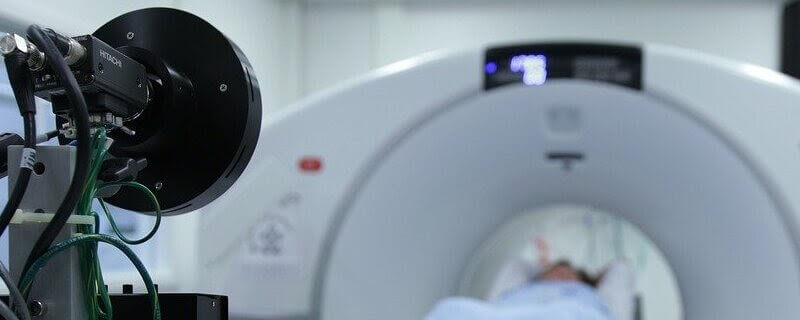
Diagnosis of pilomatrixoma does not begin with imaging; the affected area is first assessed through visual inspection and palpation.
🔬 Diagnostic Process
📝 Examination Methods
1️⃣ Ultrasound (Echo) Examination
In some cases, an ultrasound examination may be sufficient for diagnosis.
2️⃣ X-ray Imaging
X-ray imaging can identify the location of the tumor and support a diagnosis of pilomatrixoma.
⚠️ However, in early stages before significant calcification has occurred, the findings may not be clearly visible on imaging.
3️⃣ CT / MRI Examination (More Accurate)
📊 CT imaging: characteristic eggshell-like calcification is typically revealed [6]📊 MRI imaging: a mixed signal pattern on both T1- and T2-weighted images is the typical finding [6]
💡 By using CT and MRI, it is possible to distinguish pilomatrixoma from other conditions that may be difficult to identify based on appearance alone.
🔬 Histopathological Features
🧪 The Diagnostic Triad
1️⃣ Basophilic cells resembling hair matrix cells
2️⃣ Eosinophilic shadow cells
3️⃣ Calcification
🔬 Immunohistochemically, nuclear accumulation of β-catenin protein is a key feature for confirming the diagnosis [5,8].
✅ Additionally, a pattern of CD34 positivity and cytokeratin negativity is also recognized as a characteristic finding [19].
⚠️ Quantifying the Risk of Malignant Transformation
📊 Risk of Malignant Transformation
✅ Malignant transformation of pilomatrixoma (pilomatrix carcinoma) is extremely rare, occurring in approximately 0.5–2% of all cases [21,22]
⚠️ Malignant transformation is typically seen in multiple lesions or large tumors that have been left untreated for a long period
🚨 Warning Signs
❌ Rapid growth
❌ Ulcer formation
📈 Epidemiology and Incidence of Pilomatrixoma
📊 Statistical Data
🔢 Pilomatrixoma is a relatively rare skin tumor, accounting for approximately 0.5–1% of all skin tumors [18]
📅 The annual incidence is estimated at approximately 1–2 cases per 100,000 people [10,11,18]
👶 The highest occurrence is during childhood and adolescence
📍 Distribution by Location
🥇 Head and neck: approximately 70%
🥈 Upper limbs
🥉 Trunk
🧬 Molecular Biological Mechanisms of Pilomatrixoma
🔬 In the pathogenesis of pilomatrixoma, abnormal activation of the Wnt signaling pathway plays a central role [5,7,8].
🧪 Details of Gene Mutations
📊 Activating mutations in exon 3 of the CTNNB1 gene are found in approximately 90% of cases [5,7]
⚡ Abnormal accumulation of β-catenin protein leads to disrupted differentiation of hair matrix cells
💡 These molecular biological findings provide important insights for improving diagnostic and therapeutic strategies [8]
🎯 Post-Treatment Course and Long-Term Prognosis
✅ Favorable Prognosis
🎉 With appropriate surgical excision, the prognosis is favorable
📊 The recurrence rate after complete excision is less than 1% [17,18]
😊 Cosmetic satisfaction following surgery is generally high, and scars tend to become less noticeable over time [6,25]
⚠️ However, in patients with concurrent myotonic dystrophy, multiple lesions may develop, making long-term follow-up advisable [14]
🌍 Pilomatrixoma and β-Catenin
🏆 Molecular biological research on pilomatrixoma has attracted international attention, and the discovery of β-catenin gene mutations in particular represented a significant scientific development [5].
💡 If reading this has made you feel concerned…
✅ Early detection and early treatment are important
✅ Distinguishing this condition from a malignant tumor is difficult without specialist evaluation
✅ Leaving it untreated allows it to grow larger, which means a larger surgical incision will be needed
📞 If you are unsure, start with a consultation
🔄 How Is Pilomatrixoma Different from an Epidermoid Cyst? Distinguishing It from Similar Tumors

👀 The following tumors are commonly confused with pilomatrixoma:
| Condition | Characteristics |
|---|---|
| 💧 Epidermoid Cyst (Atheroma) | Gradually enlarges over time |
| 🧈 Lipoma | Develops primarily in subcutaneous fat |
| 💎 Steatocystoma | Tends to develop as multiple lesions once it appears |
⚠️ Since the appropriate course of action differs depending on the diagnosis, please use this information as a reference when assessing your own symptoms.
💧 Epidermoid Cyst (Atheroma)
📝 Characteristics of Epidermoid Cysts
An epidermoid cyst is a tumor in which a lump beneath the skin gradually enlarges over time.
🔄 It begins as a small sac-like structure, but slowly grows as keratin and sebum accumulate inside
⚠️ Because it also presents as a subcutaneous lump, it can be difficult to distinguish from pilomatrixoma
🚨 Risks of Leaving It Untreated!
🦠 If bacteria enter through the small opening on the surface of the cyst and cause infection, symptoms such as pain and redness may develop
💀 As the condition progresses, pus may discharge from the affected area, so prompt medical attention is recommended when an epidermoid cyst is suspected
👉 For information on the causes and treatment of epidermoid cysts, please see the following page.
📖 About Epidermoid Cysts (Atheroma)
🧈 Lipoma
📝 Characteristics of Lipomas
A lipoma is a condition in which fat-storing cells proliferate, causing a swelling or lump to form in the skin.
📏 Lipomas can range widely in size, from approximately 1 cm to 10 cm
😌 There is generally no pain in the affected area
💪 Most lipomas develop in the subcutaneous fat, which forms the deepest layer of the skin
⚠️ Like pilomatrixoma, lipomas typically cause no visible changes to the skin surface, making self-diagnosis difficult
🧬 Regarding the Cause
❓ The precise cause of lipomas is not yet fully understood
📊 However, chromosomal abnormalities are observed in nearly 80% of cases, suggesting that genetic factors may be involved in their development
⚡ Since lipomas tend to grow larger over time, surgical removal is generally necessary
👉 For more information on the types of lipomas and the treatment process, please see the following page.
💎 Steatocystoma
📝 Characteristics of Steatocystoma
A steatocystoma is a lump that develops around the sebaceous glands, which secrete sebum.
📍 It most commonly appears on the chest, underarms, and neck
😌 Steatocystomas are generally asymptomatic
⚠️ If a cyst ruptures and becomes inflamed, pain and swelling may occur
⚠️ Risk of Multiple Lesions!
📊 A key characteristic of steatocystoma is its tendency to develop as multiple lesions once it appears
🏥 Surgical treatment is performed, but if the cyst itself is not completely removed, there is a risk of recurrence
👉 For information on our treatment fees for steatocystoma, please see the following page.
💉 Treatment for Pilomatrixoma

🏥 Surgical Excision Is the Only Treatment Option
✅ Complete excision is associated with favorable outcomes; when an adequate excision margin is achieved, the recurrence rate has been reported to be less than 1% [17,18]
⚠️ Incomplete excision carries a recurrence rate of approximately 10–15%, which is why complete removal including the capsule is important [17]
⚠️ Why Leaving It Untreated Is Risky
🐌 Pilomatrixoma tends to grow slowly, but it does not disappear on its own
🦠 If a bacterial infection develops, the area may become red and swollen
❌ The tumor cannot be eliminated with oral medications, topical treatments, or laser therapy
✅ Therefore, surgical removal is necessary to address the condition
🚨 Self-Diagnosis Is Risky!
⚠️ What appears to be a pilomatrixoma may, in some cases, be a malignant condition
❌ It can be difficult to determine the nature of a tumor without professional evaluation, so please consider consulting a clinic if pilomatrixoma is suspected
💡 Benefits of Early Treatment
✅ A smaller incision is required
✅ Treatment costs may be lower
✅ The risk of malignant transformation can be reduced
✅ Same-day surgery is possible
📞 Consult a specialist before hesitating
💰 Estimated Cost of Pilomatrixoma Surgery

💴 The approximate costs for pilomatrixoma surgery are as follows.

💡 Regarding Health Insurance Coverage
✅ When malignancy is suspected: covered by insurance
✅ When the medical necessity of surgery is recognized: covered by insurance
❌ For cosmetic purposes: not covered by insurance
📊 Under insurance-covered care, patients are generally responsible for 30% of the treatment cost
❓ Frequently Asked Questions About Pilomatrixoma

💬 Below, we address common questions that patients often have about the treatment of pilomatrixoma.
❌ Please avoid attempting to treat pilomatrixoma on your own, as this can lead to infection.
🦠 Attempting self-treatment carries the risk of bacterial infection, which can cause redness, swelling, and suppuration of the wound.
⚠️ Additionally, it can be difficult to distinguish pilomatrixoma from a malignant tumor on your own. To avoid delays in treatment in the event that what you believe to be pilomatrixoma turns out to be malignant, please consider consulting a clinic.
✅ There are two main situations in which pilomatrixoma surgery may be eligible for health insurance coverage [6,13].
Coverage may apply when malignancy is suspected or when the medical necessity of surgery is recognized.
1️⃣ When malignancy is suspected
2️⃣ When the medical necessity of surgery is recognized
💴 Under insurance-covered care, patients are generally responsible for 30% of the treatment cost.
❌ Please note that treatment sought for cosmetic purposes is not eligible for insurance coverage.
✅ Pilomatrixoma usually occurs as a single lesion; however, it is known to develop as multiple lesions in patients with type 1 myotonic dystrophy [14].
📊 In such cases, the incidence has been reported to be 10–20 times higher than in the general population, and multiple pilomatrixomas are recognized as an important skin manifestation of this hereditary condition [14].
😊 In general, once a lump is surgically removed, recurrence at the same site is unlikely.
⚠️ If you are experiencing multiple pilomatrixomas, there is a possibility that you may also have a condition called myotonic dystrophy.
🧬 Myotonic dystrophy is a hereditary condition in which muscle stiffness leads to progressive muscle weakness. It can affect other organs and, in some cases, cause pilomatrixomas to develop on the scalp.
🚨 When pilomatrixoma is caused by myotonic dystrophy, multiple tumors tend to develop. Malignant tumors may also be seen in patients with myotonic dystrophy, so if you have any concerning symptoms, we encourage you to consult a clinic promptly.
✅ A scar with some redness may remain after surgical excision of pilomatrixoma, but it tends to fade over time.
📏 The scar typically appears as a thin line or crease, and its size will vary depending on the location and size of the tumor.
⚠️ However, patients with a keloid tendency—where scars become raised and resemble a welt—should be aware that scarring may be more noticeable.
✅ Surgery for pilomatrixoma can be performed on babies and children without issue.
⏰ As the condition progresses, a larger incision may be required, so earlier removal tends to result in a better cosmetic outcome.
💉 Since it can be difficult for babies and young children to remain still during surgery, general anesthesia is typically used for patients up to around 12–13 years of age.
😊 Because pilomatrixoma is located close to the surface of the skin, deep incisions are not required, and the physical burden on the patient is generally manageable.
👍 Surgical removal of pilomatrixoma under general anesthesia in babies and young children is not an uncommon procedure, so please do not hesitate to consider an early consultation.
📋 Please note that our clinic does not treat patients aged 12 years or under. If we receive an inquiry regarding a baby or a child aged 12 or under, we will provide a referral to a general hospital or other appropriate medical facility.
🎯 Key Points for Pilomatrixoma Treatment
✅ Does not resolve on its own → Surgery is required
✅ Earlier treatment means a smaller incision
✅ Treatment may be covered by health insurance (subject to conditions)
✅ Same-day surgery is available
✅ Distinguishing this condition from a malignant tumor is difficult without specialist evaluation
📞 Why not consult a specialist today?
✨ A consultation can help put your mind at ease
✨ 6 Features of Our Clinic That Patients Appreciate

👥 Team-Based Care
Our clinic brings together specialists from multiple disciplines—including plastic surgery, dermatology, and orthopedic surgery—under the guidance of board-certified plastic surgeons certified by the Japan Society of Plastic and Reconstructive Surgery.

💊 Attention to Patient Comfort
Our specialist physicians select the most appropriate procedure from a wide range of surgical options, with the aim of minimizing discomfort during treatment.

✨ Minimizing Scarring
We perform surgical excision with meticulous care to avoid unnecessary damage to the surrounding skin.

💰 Insurance Coverage Available
At our clinic, treatment may be covered by health insurance when malignancy is suspected or when the medical necessity of surgery is recognized.

🏠 Same-Day Surgery Available — No Hospital Stay Required
The process from consultation to surgery is streamlined, allowing same-day procedures in many cases.

🚉 Convenient Access
Our clinic is conveniently located just a 1-minute walk from JR Omiya Station and other major terminal stations.
💭 Many patients visit our clinic with concerns like these.
Do any of these sound familiar?

😟 Those troubled by an unexplained lump on their body
😰 Those who have noticed that part of their skin has become abnormally hard,
like calcium
⏰ Those who have been told that surgery is a possibility, but ultrasound or MRI appointments are not immediately available
💡 We will suggest a treatment approach tailored to your individual symptoms.
📞 If you are considering treatment for pilomatrixoma, please feel free to reach out to our clinic.
Start with a consultation!
📚 References
- 1. Japanese Dermatological Association, ed. Dermatology, 11th Edition. Bunkodo, 2018.
- 2. Hashimoto K, Brownstein MH, Jakobiec FA. Pilomatrixoma: histochemical and electron microscopic studies. Arch Dermatol. 1974;110(2):209-216.
- 3. Forbis R Jr, Helwig EB. Pilomatrixoma (calcifying epithelioma). Arch Dermatol. 1961;83:606-618.
- 4. Moehlenbeck FW. Pilomatrixoma (calcifying epithelioma): a statistical study. Arch Dermatol. 1973;108(4):532-534.
- 5. Chan EF, Gat U, McNiff JM, Fuchs E. A common human skin tumour is caused by activating mutations in beta-catenin. Nat Genet. 1999;21(4):410-413.
- 6. Japan Society of Plastic and Reconstructive Surgery, ed. Plastic Surgery, 4th Edition. Kokseido Publishing, 2017.
- 7. Lazar AJ, Calonje E, Grayson W, et al. Pilomatrix carcinomas contain mutations in CTNNB1, the gene encoding beta-catenin. J Cutan Pathol. 2005;32(2):148-157.
- 8. Hassanein AM, Glanz SM. Beta-catenin expression in benign and malignant pilomatrix neoplasms. Am J Dermatopathol. 2004;26(6):522-524.
- 9. Harii K, Hashimoto K, eds. NEW Dermatology, 3rd Edition. Nakayama Shoten, 2018.
- 10. Yencha MW, Linfesty R, Blackmon A. Pilomatrixoma of the head and neck in children: a retrospective study. Int J Pediatr Otorhinolaryngol. 2001;57(2):123-128.
- 11. Lan MY, Lan MC, Ho CY, et al. Pilomatrixoma in children: a retrospective study of 179 cases in Taiwan. Arch Otolaryngol Head Neck Surg. 2003;129(10):1109-1112.
- 12. Duflo S, Nicollas R, Roman S, et al. Pilomatrixoma of the head and neck in children: a study of 38 cases and a review of the literature. Arch Otolaryngol Head Neck Surg. 1998;124(11):1239-1242.
- 13. Japanese Dermatological Association. Clinical Practice Guidelines for Skin Tumors, 2nd Edition. 2015.
- 14. Aguiar LM, Nico MM, Kamiya H, et al. Multiple pilomatrixomas associated with myotonic dystrophy. J Dermatol. 2004;31(9):729-733.
- 15. Danielson-Cohen A, Lin SJ, Hughes CA, et al. Head and neck pilomatrixoma in children. Arch Otolaryngol Head Neck Surg. 2001;127(12):1481-1483.
- 16. Aničić M, Janković I, Milošević B, et al. Pilomatrixoma: clinical and histopathological study of 149 cases. Arch Dermatol Res. 2012;304(8):649-654.
- 17. Sari N, Yavuzer R, Basterzi Y, et al. Pilomatrixoma in children: experience with 77 cases. Eur J Plast Surg. 2005;28(5):320-323.
- 18. Pirouzmanesh A, Reinisch JF, Gonzalez-Gomez I, et al. Pilomatrixoma: a review of 346 cases. Plast Reconstr Surg. 2003;112(7):1784-1789.
- 19. Weiss SW, Goldblum JR. Enzinger and Weiss’s Soft Tissue Tumors, 6th Edition. Elsevier, 2014.
- 20. Editorial Committee of the Japanese Journal of Dermatology. “Diagnosis and Treatment of Pilomatrixoma.” Jpn J Dermatol. 2019;129(8):1567-1582.
- 21. Lopansri S, Mihm MC Jr. Pilomatrix carcinoma or calcifying epitheliocarcinoma of Malherbe: a case report and review of literature. Cancer. 1980;45(8):2368-2373.
- 22. Hardisson D, Linares MD, Nistal M. Pilomatrix carcinoma: a clinicopathologic study of six cases and review of the literature. Am J Dermatopathol. 2001;23(5):394-401.
- 23. Brownstein MH, Arluk DJ. Proliferating trichilemmal cyst: a simulant of squamous cell carcinoma. Cancer. 1981;48(5):1207-1214.
- 24. Fletcher CDM, Bridge JA, Hogendoorn PCW, et al. WHO Classification of Tumours of Soft Tissue and Bone, 4th Edition. IARC Press, 2013.
- 25. Robinson JK, Hanke CW, Siegel DM, et al. Surgery of the Skin: Procedural Dermatology, 3rd Edition. Elsevier, 2015.