
😰 If left untreated, symptoms may worsen and treatment may take longer
✅ What you will learn from this article:
🔹 Effective treatment options for hypertrophic scars (insurance coverage may apply)
🔹 How to determine whether surgery is needed
🔹 Why over-the-counter medications may not be effective
🔹 How early treatment may help minimize symptoms
⏰ A quick 3-minute read! Please read to the end to help prevent your symptoms from lingering.
💡 “What is a hypertrophic scar?”
💡 “What should I do if I develop a hypertrophic scar?”
🤔 If you have been struggling with these kinds of skin concerns, you are not alone.
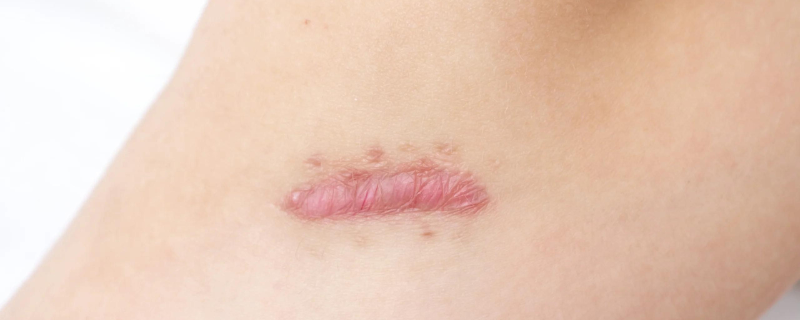
📌 Hypertrophic scarring is a skin condition in which scar tissue becomes firm and raised. Depending on the extent of the affected area, it may also be referred to as a keloid.
🔍 What Is a Hypertrophic Scar?
A hypertrophic scar is a skin condition in which the site of a surgical incision or injury becomes red, raised, or firm.
When redness and hardening extend beyond the original wound area, the condition is called a keloid. When these changes remain confined to the original wound area, it is referred to as a hypertrophic scar.
In particular, hypertrophic scars and keloids tend to form at sites such as piercing holes, acne scars, and cesarean section incisions.
💊 When a Hypertrophic Scar Does Not Improve: Treatment Options
📋 The main treatment options for hypertrophic scars are as follows.
| Treatment | Details |
|---|---|
| 🩹 Compression Therapy | · Applying tape or sponge padding to compress and immobilize the affected area, promoting rest |
| 💉 Topical Therapy | · Application of steroid tape or ointment · Use of occlusive bandages to maintain moisture |
| 💉 Intralesional Injection Therapy | · Direct injection of a corticosteroid into the keloid or hypertrophic scar tissue |
| 💊 Oral Medication Therapy | · Use of anti-allergic agents · May help relieve itching |
| ✨ Laser Treatment | · Application of laser energy to reduce the number of blood vessels in the affected area ※ Not covered by insurance |
| 🧊 Other | · Liquid nitrogen may be used in some cases |
🏥 Hypertrophic scars may also be directly removed through surgery.
✅ A combination of the conservative treatments listed above is typically used to help manage and relieve symptoms.
💡 At IC Clinic
✅ Multiple treatment options with potential insurance coverage are available
✅ We propose a treatment plan tailored to your individual condition
✅ Same-day outpatient procedures also available
Please feel free to reach out for a consultation!
🏥 When Is Surgery Considered for Hypertrophic Scars? Managing Cases That Do Not Respond to Conservative Treatment
📌 Surgery may be considered for hypertrophic scars in the following situations.
- 🎯 When the scar is confined to a very small, localized area
- 🦾 When the scar tissue causes tightness that restricts joint movement
- 👁️ When the scar is located in a highly visible area
🔪 During surgery, hypertrophic scar tissue is partially or fully excised and the wound is sutured.
🩹 When a hypertrophic scar or wound covers a large area, skin grafting from another part of the body or techniques to promote skin regeneration may be used after excision.
⚠️ While surgery aims to make hypertrophic scars as inconspicuous as possible, some scarring may remain. For this reason, it is generally recommended to continue conservative treatment after surgery.
❓ Why Do Hypertrophic Scars Form? Causes of Hypertrophic Scarring
🔬 The main causes thought to contribute to hypertrophic scars and keloids are primarily the following two factors.
- 🧬 An individual’s constitutional tendency, sometimes referred to as a “keloid-prone constitution”
- 🏃 Vigorous physical activity after surgery or injury
💡 As the term “keloid-prone constitution” suggests, even when people undergo similar surgeries or sustain similar injuries, some individuals develop hypertrophic scars or keloids while others do not.
⚠️ Additionally, repeated stretching of the skin due to vigorous activity after surgery or injury, or a prolonged healing process due to infection, may increase the likelihood of developing hypertrophic scars or keloids.
📊 Furthermore, the likelihood of developing hypertrophic scars or keloids also varies by age and body site, as shown below.
| Age | Body Site | |
|---|---|---|
| ⚠️ Higher Risk | · Late elementary school age through adolescence | · Anterior chest, back, lower abdomen, ears, etc. |
| ✅ Lower Risk | · Older adults | · Palms, soles of feet, face, scalp, lower legs, etc. |
🧬 A “keloid-prone constitution” is thought to be a type of allergic tendency and may be hereditary.
❓ Frequently Asked Questions About Hypertrophic Scars
🙋 Here is a summary of frequently asked questions about hypertrophic scars.
💊 Are over-the-counter medications or adhesive tapes effective for hypertrophic scars?
❌ Over-the-counter medications and adhesive tapes generally show limited effectiveness for hypertrophic scars.
⚠️ This is because Drenizon Tape (a steroid tape) known to be effective for hypertrophic scars is prohibited from over-the-counter sale under Japanese law.
✅ The following prescription medications and tapes have shown recognized effects for hypertrophic scars.
| Medication | Features |
|---|---|
| 💊 Rizaben (Tranilast) | · Oral anti-allergic agent · May help relieve pain and itching · Commonly used in combination with other treatments |
| 🩹 Drenizon Tape | · Mild-strength steroid tape · Intended to help calm hypertrophic scar tissue |
| 🩹 Steroid Tape | · Higher-strength steroid tape · Intended to help calm hypertrophic scar tissue |
💉 When tape therapy does not lead to improvement, Kenacort (a corticosteroid) injections may be used.
✨ One advantage of injections is the potential for a more pronounced effect compared to oral medications and tapes.
⚠️ However, because the medication must be injected directly into firm scar tissue, the procedure may be associated with significant discomfort.
🤔 Q: Can acne cause hypertrophic scars?
✅ Hypertrophic scars can develop as a result of acne.
🔬 When acne inflammation becomes chronic, cells release collagen-rich substances to repair the inflamed area.
⚠️ However, in individuals with a “keloid-prone constitution,” excessive collagen production may continue, which can lead to the development of hypertrophic scars.
📍 In particular, the area along the jawline and chin is frequently subjected to skin tension, making it a common site for hypertrophic scar formation.
🏠 Q: Is it possible to treat hypertrophic scars on your own?
❌ Treating hypertrophic scars on your own is difficult.
📋 The two main reasons are as follows.
- 🚫 Over-the-counter medications and adhesive tapes often show limited effectiveness for hypertrophic scars
- ⏰ The inflammation may take anywhere from one to five years to subside
⚠️ In particular, when hypertrophic scars develop in areas subject to frequent tension—such as joints or the neck—it can take a considerable amount of time for inflammation to settle.
💡 If you develop a hypertrophic scar, the first step is to keep the affected area as still as possible and allow it to rest.
🏥 Q: What type of doctor or clinic should I see for hypertrophic scars?
🏥 Hypertrophic scars can be treated at dermatology or plastic surgery clinics.
⚠️ Since hypertrophic scars are often difficult to treat with over-the-counter medications and may involve prolonged inflammation, we recommend consulting a physician as soon as possible.
⚠️ Leaving symptoms unaddressed based on self-judgment may lead to worsening of the condition
😰 Over-the-counter medications often show limited effectiveness for hypertrophic scars
✅ Early treatment by a specialist is key to managing symptoms
✅ There are also many treatment options with potential insurance coverage
💡 We will first discuss the treatment approach best suited to your individual needs at a consultation!
🏥 For Hypertrophic Scar Treatment in Saitama (Omiya), Please Consult IC Clinic
🧬 Although a “keloid-prone constitution” is considered a primary contributing factor, hypertrophic scarring is a skin condition that can potentially affect anyone following surgery or injury.
⚠️ Since treatment with over-the-counter products is often difficult and surgical intervention may be required in some cases, we encourage you to seek medical evaluation as early as possible.
💙 IC Clinic strives to be a welcoming clinic where patients of all ages and backgrounds feel comfortable seeking consultation.
✨ Whatever your concerns, we are here to listen and work with you to discuss treatment options that suit your needs. If you have any worries about hypertrophic scars or keloids, please do not hesitate to reach out to IC Clinic.
🏥 Why Patients Choose IC Clinic Omiya
✅ Consultations and treatments handled by specialist physicians with University of Tokyo backgrounds
✅ Insurance-covered treatments to minimize your financial burden
✅ Same-day outpatient procedures available for those with busy schedules
✅ Open year-round, including weekends and public holidays
✅ Conveniently located a 5-minute walk from Omiya Station
✅ Consultations available for relaxed, informal discussion
📞 Phone reservations: 0120-561-118
🌐 Online booking available 24 hours a day, 7 days a week
💡 First-time patients are welcome — please visit us with confidence
Our specialists will guide you through the consultation process with care
📚 References
- 📖 Japanese Dermatological Association & Japan Wound Surgery Society. “Clinical Practice Guidelines for Scars and Keloids (2018 Revised Edition).” Journal of the Japanese Dermatological Association, 2018.
- 📖 Japan Society of Plastic and Reconstructive Surgery. “Clinical Practice Guidelines for Plastic Surgery.” 2015 Edition.
- 📖 Ministry of Health, Labour and Welfare. “Insurance Coverage for Scar and Keloid Treatment.” Ministerial Notification No. 567, 2020.
- 📖 Japan Society for Laser Surgery and Medicine. “Clinical Practice Guidelines for Dermatological Laser Treatment.” 2017 Edition.
- 📖 Japanese Society for Wound Healing. “Mechanisms of Wound Healing and Scar Formation.” Society Journal, 2019.
⚠️ ※ The above references are provided as medical evidence sources. For actual diagnosis and treatment decisions, please consult a qualified specialist.