

💡 What You’ll Learn from This Article
- ✅ Leaving an epidermoid cyst untreated carries the risk of inflammation and rupture
- ✅ Early detection and timely treatment can help minimize scarring
- ✅ Surgery is covered by national health insurance and can be performed as a same-day procedure (under 20 minutes)
- ✅ Attempting to pop the cyst yourself may cause it to worsen to two or three times its original size
😰 If You Skip This, You May Regret It…
- ❌ Leaving it untreated leads to inflammation → pain and swelling that interfere with daily life
- ❌ Popping it yourself → infection and permanent scarring
- ❌ Delaying treatment → longer surgery time and higher costs
📋 What Is an Epidermoid Cyst (Atheroma)? A Guide to Receiving Treatment with Confidence
📌 What Is an Epidermoid Cyst?
A benign tumor that forms when dead skin cells and waste products accumulate beneath the surface of the skin.

⚠️ The Risk of Leaving It Untreated
If left untreated, an epidermoid cyst can grow larger and may rupture, leading to inflammation. For this reason, it is advisable to consider treatment as soon as you notice one.
👉 What Happens If You Leave an Epidermoid Cyst Untreated? A Detailed Look at the Risks

📖 What This Article Covers
This article covers a wide range of information — from a basic explanation of what an epidermoid cyst is, to detailed information about surgical procedures for patients who are considering treatment.

If you are concerned about an epidermoid cyst, we hope you find this guide helpful.
🔍 What Is an Epidermoid Cyst (Atheroma)? Symptoms and Causes
💊 Definition
An epidermoid cyst is a benign tumor that develops when dead skin cells, sebum, and other waste products accumulate beneath the skin.

🎒 How It Forms
A sac-like pocket forms inside the skin, trapping waste materials that would normally be shed from the body.

✨ Three Key Characteristics of Epidermoid Cysts

(1) Early symptoms are often difficult to notice
(2) There is a risk of inflammation
(3) They are easily mistaken for other skin conditions or acne

Let's also look at the causes and common characteristics of people who tend to develop them.
👉 Causes of Epidermoid Cysts and Their Relationship to Individual Constitution

😟 Characteristic ① Early symptoms are often difficult to notice
🔎 Early Symptoms
In the early stages, an epidermoid cyst typically presents only as a small lump beneath the skin, with little to no visible change on the skin surface, making it easy to go unnoticed.
👉 A Detailed Guide to Epidermoid Cyst Pain and Symptoms

📈 How It Progresses
The sac starts out very small, but because the keratin and sebum inside cannot escape, they continue to accumulate over time.

As a result, the cyst gradually grows larger before most people become aware of it.
👉 Epidermoid Cyst Size and Surgical Guidelines
🚨 Characteristic ② Risk of inflammation
🦠 Risk of Infection
An epidermoid cyst has a small opening through which bacteria can enter, potentially causing infection.
👉 Epidermoid Cyst Infection and Antibiotic Treatment

🔴 What Is an Inflamed Epidermoid Cyst?
When infected and inflamed, the cyst is referred to as an "inflamed epidermoid cyst," which is commonly accompanied by symptoms such as pain, a sensation of warmth, and redness.
👉 Treatment Options for Inflamed Epidermoid Cysts

⚡ When Urgent Care Is Needed
In some cases, prompt drainage surgery may be required to release the accumulated pus.
❓ Characteristic ③ Easily mistaken for a pimple or acne
🤔 A Common Misconception
Epidermoid cysts are often mistaken for pimples or acne, leading many people to assume they will heal on their own and leave them untreated.

⚠️ The Reality
In reality, they rarely resolve by themselves. In many cases, people only recognize the condition as an epidermoid cyst after it has gradually grown larger and developed inflammation or become infected.
👉 Can an Epidermoid Cyst Become Malignant? The Risks of Leaving It Untreated
🧬 Why Do Epidermoid Cysts Form? Understanding the Causes
🔬 Medical Understanding
In most cases, the direct cause of an epidermoid cyst is not yet fully understood.
👉 Causes of Epidermoid Cysts and Their Relationship to Individual Constitution

📊 How They Develop
It is thought that dead skin cells accumulate inside the skin due to some trigger, and the surrounding skin then develops into a sac-like structure beneath the surface.

🔸 Rare Cases
In rare cases, cysts may also develop following trauma, a blocked hair follicle, or a viral infection.

🛡️ Prevention
Because the cause is not clearly established, there is no definitive way to prevent them.
👉 Are There Ways to Prevent Epidermoid Cysts? Everyday Measures You Can Take

⏰ Tips for Early Detection
Epidermoid cysts rarely resolve on their own, and many people notice them only after they have gradually grown in size.

For this reason, we encourage periodic self-checks of areas that are easy to overlook — such as the back of the neck and the back — to help with early detection.
👤 Who Is More Likely to Develop Epidermoid Cysts?
❔ No Clear Answer
Since the direct cause of epidermoid cysts is not clearly understood, it is difficult to say with certainty who is more prone to developing them.

🧬 Genetic Factors
While there is no known genetic factor involved, certain tendencies have been observed in people who develop them more frequently.

⚠️ Habits That May Increase Risk
For example, habits such as picking at acne or forcefully squeezing clogged pores can create entry points for bacteria, which may contribute to the formation of epidermoid cysts.

🧼 Lifestyle Habits for Prevention
It is therefore helpful to keep the skin clean through regular bathing and a consistent skincare routine, helping to maintain a condition less prone to acne and related issues.
🔎 How to Distinguish an Epidermoid Cyst from Other Conditions
📋 Key Points for Identification
Next, let's look at how to tell an epidermoid cyst apart from other skin conditions.

🆚 Similar Conditions
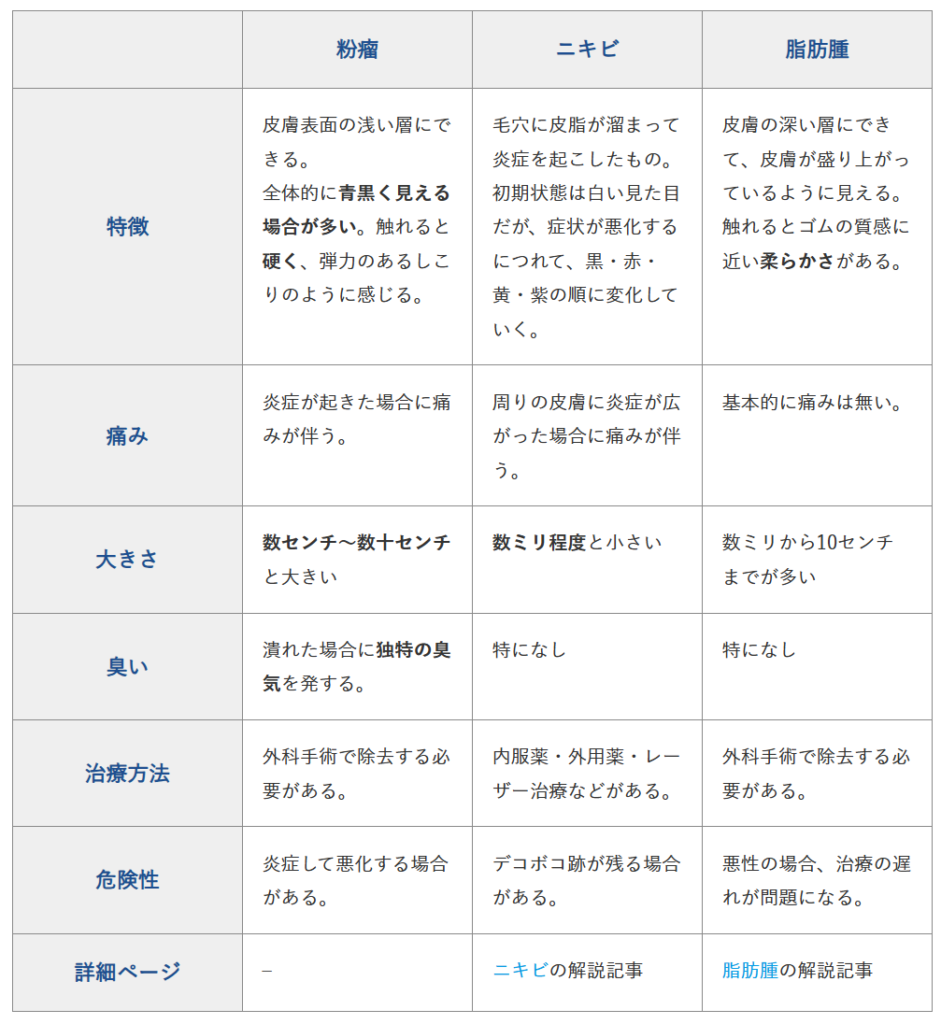
Epidermoid cysts have characteristics that differ from acne. They also share similarities with lipomas, which can cause confusion.

Below is a summary of the differences between epidermoid cysts, acne, and lipomas.
👆 How to Self-Check
When trying to distinguish an epidermoid cyst from other conditions, it can be helpful to check the color of the skin over the affected area and how it feels to the touch.

✔️ Signs That Point to an Epidermoid Cyst
If the area has a bluish-black discoloration overall, or feels like a firm, elastic lump, there is a possibility it may be an epidermoid cyst.
❓ Is It Safe to Leave an Epidermoid Cyst Untreated? Can It Heal on Its Own?
🚫 Self-Resolution Is Unlikely
Unfortunately, epidermoid cysts do not heal on their own, and because the cause is not fully understood, there is no established method of prevention.
👉 What Are the Risks of Leaving an Epidermoid Cyst Untreated?

💪 General Health Measures
General health measures — such as stress management, moderate exercise, adequate sleep, and a balanced diet — are thought to be helpful for similar conditions (such as acne and other skin blemishes).

⚠️ However…
However, even with these measures in place, it is unlikely that an epidermoid cyst will disappear on its own. We recommend considering proper treatment for the cyst.
👉 What Happens If You Leave an Epidermoid Cyst Alone?
💬 “Think It Might Be an Epidermoid Cyst?” Feel Free to Consult IC Clinic Ueno
🤝 Any Concern Is Welcome
Even if you're not quite sure after checking yourself — or if you think it might just be acne and feel it's not worth a visit — please don't hesitate to reach out to IC Clinic Ueno.

🏥 A Clinic You Can Trust
IC Clinic aims to be a welcoming clinic for patients of all ages and backgrounds. Whatever your symptoms, we are happy to discuss your concerns and suggest a treatment approach that puts you at ease.

💰 Affordable Treatment
Please note that epidermoid cyst surgery at our clinic is covered by national health insurance, so you can feel at ease about the cost. In most cases, the procedure takes under 20 minutes and can be completed on the same day as your visit.
👉 About Same-Day Epidermoid Cyst Surgery

📞 Get in Touch First
If you have any concerns about an epidermoid cyst, please don't leave it unaddressed — feel free to consult IC Clinic.
⛔ Warning: Do Not Try to Pop or Drain an Epidermoid Cyst Yourself
❓ A Common Question
"It's only a small cyst — is it okay to pop it myself...?"

We do receive questions like this from patients, but we strongly advise against attempting to drain or pop a cyst on your own. Please see a medical professional instead.

🚨 The Dangers of Self-Treatment
Attempting to pop or squeeze a cyst can allow bacteria to enter, potentially triggering an infection that may cause it to grow to two or three times its original size very quickly, leading to inflammation and pain.
👉 Treatment for an Inflamed Epidermoid Cyst

😢 Risk of Permanent Scarring
Additionally, the cyst sac can become adhered to surrounding tissue, making it more difficult for the scar to fade over time. This is a particularly unfortunate outcome for physicians who place great importance on minimizing scarring.
👉 How to Minimize Scarring After Epidermoid Cyst Surgery

📈 Cysts Grow Over Time
Furthermore, if left untreated, an epidermoid cyst will continue to grow over time.

⏰ Seek Treatment Early
While it may not pose an immediate health risk, we recommend seeking treatment at a medical clinic sooner rather than later.
😰 A Case: A Patient Who Attempted to Remove His Own Cyst with a Needle
📖 A Real Case
One patient who came to our clinic had attempted to remove an epidermoid cyst himself using a needle.

❌ The Outcome…
The self-treatment was unsuccessful, and the wound from the needle became a pathway for infection, causing the condition to worsen.

😢 A Patient's Regret
He ultimately came to our clinic for surgery, but the self-treatment had left scarring that could not be avoided, which he deeply regretted.

🔄 Risk of Recurrence
When proper curative surgery has not been performed, the cyst sac remains beneath the skin.

This means the cyst can continue to fill with keratin and sebum, growing larger over time, or — if infected — may repeatedly become red, swollen, and painful, or discharge pus.
👉 What Causes Epidermoid Cysts to Recur?

🏥 See a Medical Professional
To avoid scarring and prevent the situation from worsening, please refrain from self-treatment and seek evaluation at a medical clinic first.
✂️ Curative Treatment Requires Surgical Removal of the Cyst
💉 The Only Definitive Treatment
To achieve a definitive cure, the epidermoid cyst itself must be surgically removed.

🔄 Incision and Drainage Alone Is Not Enough
This is because epidermoid cysts rarely resolve on their own, and incision and drainage alone will not eliminate the cyst sac — leaving the possibility of recurrence.
👉 Comparing Surgical Methods for Epidermoid Cysts

🏥 Surgery at a Medical Clinic Is Necessary
It is therefore necessary to visit a medical clinic and undergo surgery to remove the cyst.

🤔 The Decision Is Yours
Since an epidermoid cyst is a benign tumor, the decision of whether to have it removed is ultimately yours to make.

⚠️ However…
However, leaving it untreated may lead to inflammation or further growth, so surgical removal is generally advisable once the cyst has reached several centimeters in size.
👉 Epidermoid Cyst Size and Surgical Guidelines
💊 Is Medication Effective for Treating Epidermoid Cysts?
📌 An Important First Point
One important thing to understand is that when surgery has not been performed, treatment typically involves antibiotics.
👉 Epidermoid Cysts and Antibiotic Treatment

💊 For Inflamed Cysts
For inflamed cysts in particular, oral antibiotics are usually prescribed first and taken for several days to help reduce the inflammation.

⚠️ A Common Misconception
While the pain may subside after taking antibiotics, this simply means the infection has been brought under control — it does not mean the cyst itself has been removed.

🔄 Risk of Recurrence
Medication can help manage the infection, but relying on medication alone without visiting a clinic means there is a risk of the bacterial infection recurring at a later stage.

🚫 Over-the-Counter Products Are Not Recommended
Topical ointments sometimes mentioned in personal blogs, or over-the-counter products marketed to draw out pus, are also not recommended approaches.

This is because even if symptoms appear to improve temporarily, the cyst sac remains inside the skin, meaning the epidermoid cyst has not been fully treated.

✂️ Surgery Is Necessary
As mentioned above, surgical removal at a medical clinic is necessary to achieve a definitive cure for an epidermoid cyst.
🔄 Epidermoid Cysts (Atheromas) Are Prone to Recurrence
⚠️ The Troublesome Nature of Epidermoid Cysts
Epidermoid cysts are a troublesome condition because they tend to recur. The following aspects make treatment particularly challenging:
👉 Causes of and Measures Against Epidermoid Cyst Recurrence

❌ Even at clinics that can examine the condition, surgery may not always be performed
❌ Treatment at a clinic may end with antibiotics alone
❌ Even when antibiotic treatment provides temporary improvement, the cyst may recur

🔬 When Surgery Has Not Been Performed
When the epidermoid cyst has not been surgically removed, the cyst sac remains beneath the skin.

This means the cyst can continue to fill with keratin and sebum, growing over time, or — if infected — may repeatedly become red, swollen, painful, or discharge pus.

⚠️ Recurrence Can Occur Even After Surgery
That said, even after curative surgical removal, the cyst sac may unfortunately remain in some cases. This risk is particularly higher for patients who underwent surgery after the cyst had already become inflamed (inflamed epidermoid cyst).

🧪 The Reason
The degree of infection plays a role: when a cyst becomes infected and produces pus, the sac can weaken and rupture, or partially dissolve, making it difficult to remove all remnants completely.

⚖️ Balancing Recurrence Risk and Scarring
While performing a wide-excision surgery can reduce the risk of recurrence by removing scattered cyst remnants more thoroughly, the resulting larger scar may not always be a desirable outcome from a cosmetic standpoint.

💡 For Those Concerned About Scarring
If you are particularly concerned about minimizing scarring from an epidermoid cyst, please consult IC Clinic. We will discuss treatment options that aim to reduce visible scarring as much as possible.
👉 Treatments to Minimize Epidermoid Cyst Scarring
📋 5 Things to Know Before Having Epidermoid Cyst Surgery
📖 Summary So Far
So far, we have covered the characteristics of epidermoid cysts, how to distinguish them from other conditions, and the risks of attempting self-treatment.

💡 Next Steps
Next, for those who are thinking "If I have an epidermoid cyst, I'd like to have it surgically removed," here are five things you should know before undergoing surgery.

📌 The Five Key Points

(1) How long does the surgery take?
(2) Two surgical methods: "fusiform (elliptical) excision" and "punch excision (enucleation)"
(3) Cost of surgery
(4) Minimal impact on daily life after surgery
(5) Will there be scarring after surgery?

These are important points to understand as you consider moving forward with treatment.

Let's go through each one.
⏰ (1) How Long Does the Surgery Take?
⚡ For Small Cysts
For small cysts of a few millimeters in size, the procedure can often be completed in as little as 5 minutes, allowing same-day surgery right after your consultation.
👉 How Long Does Epidermoid Cyst Surgery Take?

📅 For Larger Cysts
For larger cysts, an appointment may be scheduled after the initial consultation, with surgery performed on a separate day.

🏥 At IC Clinic
At IC Clinic, even for larger cysts, we aim to complete surgery within approximately 20 minutes.
👉 More About Same-Day Epidermoid Cyst Surgery

✂️ (2) Two Surgical Methods: “Fusiform Excision” and “Punch Excision (Enucleation)”
🔧 Two Surgical Approaches
There are two surgical approaches for epidermoid cysts: "fusiform (elliptical) excision" and "punch excision".
👉 Comparing Surgical Methods for Epidermoid Cysts

🎯 How We Choose
With safety and thorough treatment as the primary priorities, the most appropriate method is selected from these two options.
📍 About Fusiform (Elliptical) Excision
📖 The Most Common Method
Fusiform excision is the most commonly used surgical method for epidermoid cysts.

✂️ How It Works
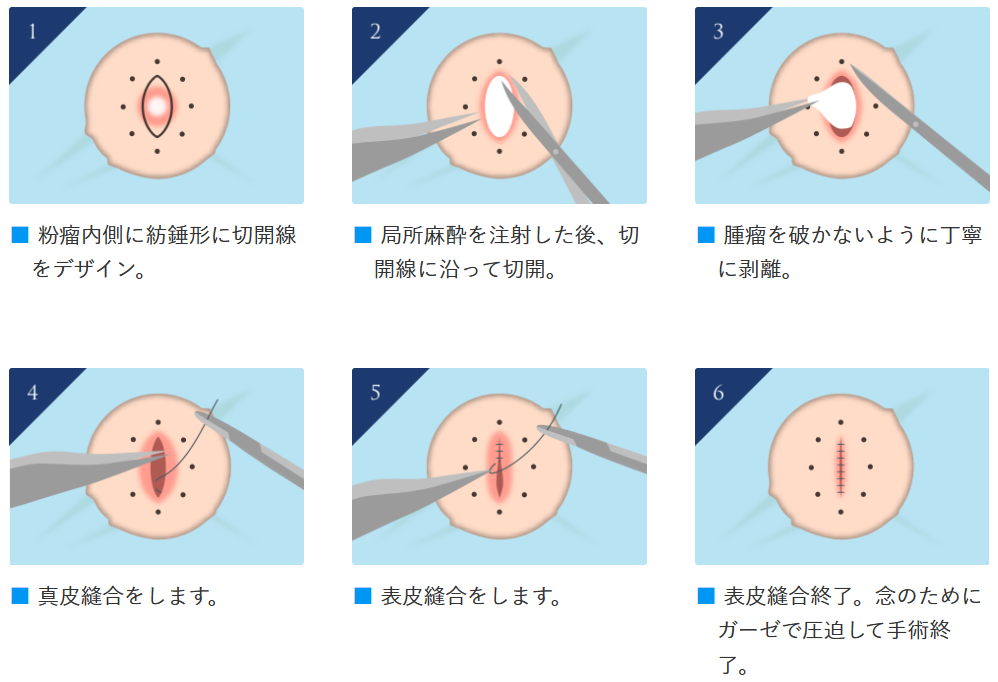
It involves making a spindle-shaped incision in the skin, removing the cyst, and then closing the wound with sutures — a straightforward surgical approach.

✨ About Scarring
With careful suturing, the scar often becomes less noticeable over time.

👍 When It Is the Better Choice
For larger cysts or inflamed epidermoid cysts, this method tends to result in a better postoperative course than attempting punch excision.

The surgical procedure is as follows.
🌟 About Punch Excision
🔧 What Is Punch Excision?
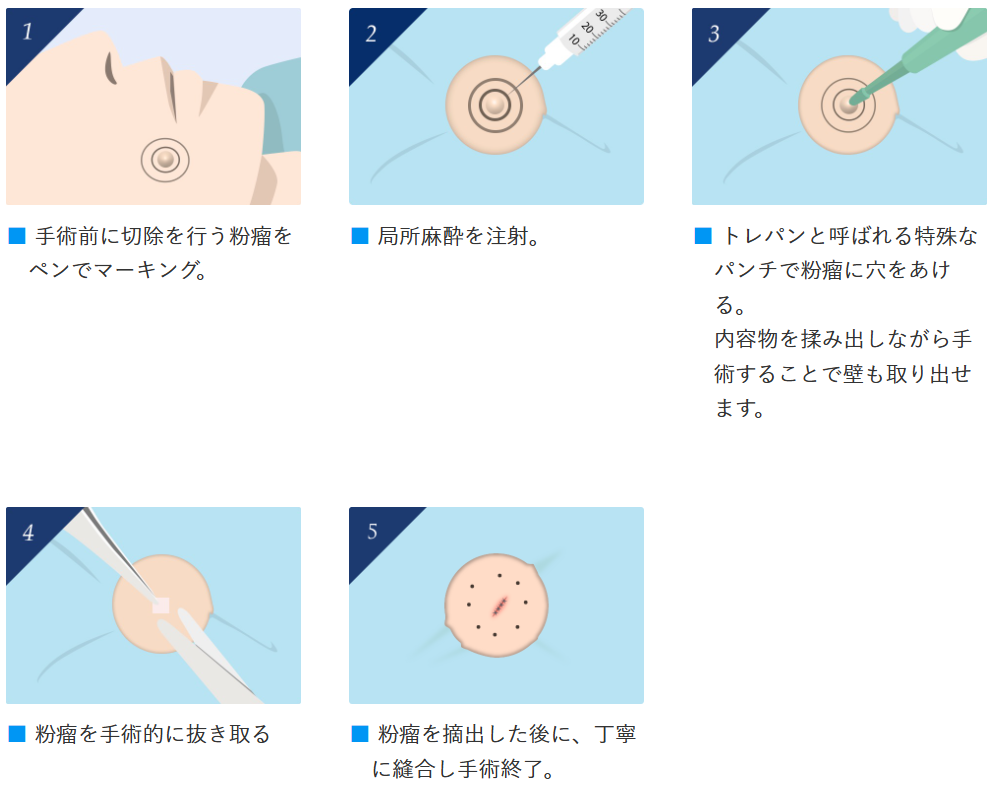
Punch excision is a technique in which a small hole is made in the cyst using a specialized punch tool, the contents of the cyst are expressed through the opening, and the collapsed cyst sac is then removed.
👉 Benefits of Punch Excision

✨ Its Greatest Advantage
Because the incision is minimal, scarring after this procedure tends to be minimal as well.

💎 Why Patients Choose It
Patients who wish to 'minimize scarring' and achieve the 'cleanest possible result' often choose punch excision.
🏥 IC Clinic's Approach
At IC Clinic, we recommend punch excision where it is appropriate for the patient's condition.

Of course, if fusiform excision is considered the better approach based on the patient's individual circumstances, we will prioritize that method. Our goal is to perform surgery using the approach that is most suitable for each patient.

⏰ Same-Day Surgery Available
For standard epidermoid cysts, same-day surgery is available.

🔄 For Inflamed Cysts
For cysts with extensive inflammation, we may first perform a punch excision-based procedure on the day of the visit to address the inflammation and pain, then schedule a separate date for definitive surgery — depending on the severity of the condition and to help reduce the risk of recurrence.
👉 The Treatment Process for Inflamed Epidermoid Cysts
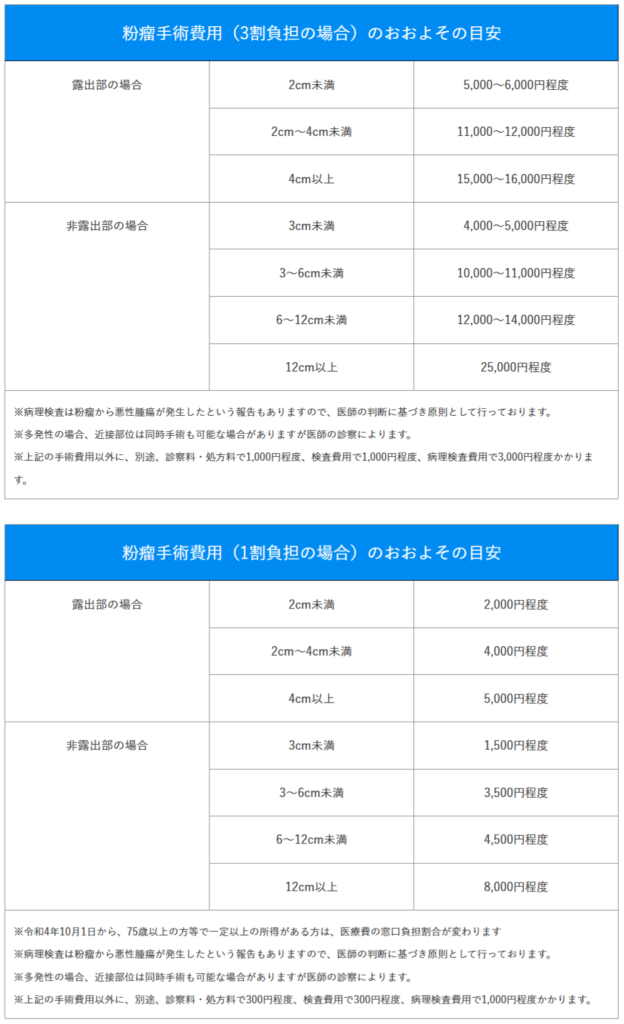
💰 (3) Cost of Epidermoid Cyst Surgery
✅ Covered by Insurance
Please be assured that diagnosis, examination, surgery, and pathological testing for epidermoid cysts are all covered by national health insurance.

💵 Costs at IC Clinic
The costs for treatment at IC Clinic are as follows.
💼 Can Private Life Insurance Cover Epidermoid Cyst Surgery?
💡 Surgery Benefit Payments
If you are enrolled in a private medical insurance plan or mutual aid association and undergo surgery covered by national health insurance following a physician's examination, you may be eligible to receive a surgery benefit payment.

⚠️ An Important Note
Even if you have life insurance, benefits will not be paid unless you submit a claim yourself.

📄 If a Written Statement Is Required
If a physician's written statement is required, please let us know at the time of your consultation.

✅ Check with Your Insurer
Please check with your private insurer or mutual aid association for details. (The procedure may be listed under a name such as "skin and subcutaneous tumor excision.")
🏃 (4) Minimal Impact on Daily Life After Surgery
✂️ Suture Removal
After epidermoid cyst surgery, suture removal is generally not required.
👉 Post-Surgery Care and Recovery After Epidermoid Cyst Surgery

🚫 Precautions on the Day of and Day After Surgery
Due to the risk of bleeding, it is advisable to avoid alcohol and strenuous exercise on the day of surgery and the following day.
👉 When Can You Exercise After Epidermoid Cyst Surgery?

✅ After That, Return to Normal
After that, you may generally return to your normal routine as directed by your physician. (However, for cysts located near joints, a longer period of rest may be required depending on the size.)

🛁 Bathing
Regarding bathing, please avoid soaking in a bath on the day of surgery due to the risk of bleeding.
👉 When Can You Bathe After Epidermoid Cyst Surgery?

🚿 From the Following Day Onward
From the following day onward, you may shower and gently wash the wound with soap. However, to maintain cleanliness, we ask that you avoid baths and swimming pools for approximately one week, using the shower only during this time.
✨ (5) Scarring After Epidermoid Cyst Surgery
📏 For Cysts of a Few Centimeters
For cysts of a few centimeters in size, the scar often becomes less noticeable over time.
👉 How to Make Epidermoid Cyst Scars Less Noticeable

📐 For Larger Cysts
For very large cysts measuring several tens of centimeters, there is a possibility that a more visible scar may remain. It is natural to hope for 'minimal scarring' and the 'cleanest possible result' after surgery.

💡 Talk to Us
There are approaches that aim to minimize scarring, so if visible scarring is a concern for you, please be sure to discuss this with us at your consultation.
⚠️ Watch Out for These Issues at Insurance-Covered Clinics!
Did you know? Even for the same insurance-covered tumor (skin lesion) surgery, the cost can vary by approximately 7,000–10,000 yen depending on the clinic.
The cost of insurance-covered tumor surgery is determined by the physician’s assessment of the size of the tumor (skin lesion). Furthermore, the final determination of tumor size should be made after surgery, based on the actual size of the removed specimen.
Unfortunately, some insurance-covered clinics appear to determine the tumor size based solely on the physician’s pre-operative judgment without applying clear measurement criteria, which can result in higher surgical costs being presented to patients.
We have seen a number of cases where patients who had been assessed at other clinics were re-measured at our clinic using clear measurement criteria, and the tumor was classified as the smallest size category — “exposed area under 2 cm (or non-exposed area under 3 cm)” — resulting in a reduction in out-of-pocket costs of 7,000–10,000 yen.
We are deeply concerned about this situation and feel it is important to raise awareness on this matter.
If you are receiving treatment for an epidermoid cyst or similar condition at another clinic, please pay particular attention to the following.
⚠️ The surgical cost is being calculated as “exposed area 2 cm or more (or non-exposed area 3 cm or more)”
If the tumor (skin lesion) turns out to be smaller than estimated before surgery, you may end up paying approximately 6,000 yen in unnecessary costs.
We therefore recommend confirming the size of the tumor (skin lesion) and the expected cost before surgery. You may ask your physician: “Will today’s surgery be billed at the lowest cost tier?”
You also have the right as a patient to request verification after surgery. Please feel free to ask your physician: “Could you show me the size of the removed specimen to confirm it was truly 2 cm or more (or 3 cm or more for a non-exposed area)?”
This is especially important when inflammation makes the tumor appear larger than it actually is. The area of inflammation and the actual size of the tumor are not the same, so it is important that the removed specimen be accurately measured.
⚠️ Points to Consider Regarding Clinical Care Structure
Safety in medicine comes not from any single physician’s skill alone, but from the support of a well-organized clinical team.
In surgery and postoperative management, having multiple professional perspectives available and a system in place to respond promptly to unexpected developments is what determines the level of safety.
In a small-team practice, even the most experienced physician may face limitations in being prepared for unexpected situations or in providing continuous follow-up care.
We believe that the quality of medical care should be ensured not through individual capability alone, but through the design of a strong organizational support structure.
🏥 Our Clinic Is Structured to Give Patients Peace of Mind
IC Clinic has a team of multiple physicians and operates under the following in-clinic guidelines to minimize the financial burden on our patients.
- Surgery is billed at the lowest cost tier — “exposed area under 2 cm (or non-exposed area under 3 cm)” — as a standard.
- In cases where the cost falls under “exposed area 2 cm or more (or non-exposed area 3 cm or more),” we take photographs of the tumor before and after surgery and retain them in order to ensure rigorous size assessment. These photographs can be shared with patients upon request.
🏥 If You Are Anxious About Epidermoid Cyst Treatment, Please Consult IC Clinic Omiya

💬 Feel Free to Reach Out
If you have any concerns about an epidermoid cyst, please feel free to consult IC Clinic Omiya.

⚠️ Before It Gets Worse
When a cyst worsens and becomes inflamed, it not only extends the treatment period but can also place a significant emotional burden on the patient.

😢 The Risk of Scarring
There is also a greater chance of scarring after treatment at that stage, which is why we encourage you to come in for a consultation as soon as you notice something that may be an epidermoid cyst.

💎 Our Approach
At our clinic, we propose treatment approaches tailored to each patient's condition, aiming to minimize discomfort and reduce the likelihood of visible scarring.

🤝 Treatment with Care and Compassion
We are committed to listening carefully to each patient's concerns and worries, and to supporting you through your treatment journey together.
✨ Why Patients Choose IC Clinic Omiya
- ✅ Conveniently located just 1 minute on foot from Omiya Station East Exit
- ✅ National health insurance accepted to reduce out-of-pocket costs
- ✅ Surgery completed within 20 minutes — same-day procedures available
- ✅ Treatment approaches aimed at minimizing scarring
- ✅ Specialist physicians with extensive clinical experience
- ✅ Open on weekends and public holidays for convenient access
💡 Recommended for Those Who:
- 🔹 Are not sure if they have an epidermoid cyst but would like a consultation
- 🔹 Want to avoid visible scarring
- 🔹 Are looking for a procedure with minimal discomfort
- 🔹 Want to receive treatment without taking time off work or school
- 🔹 Are concerned about cost (national health insurance accepted)
📱 Phone Reservations: 0120-561-118
⏰ Weekdays, Weekends & Public Holidays: 10:00–14:00 / 15:00–19:00
📚 Related Articles on Epidermoid Cysts
🔬 Epidermoid Cyst Basics
- 📖 Causes of Epidermoid Cysts and Individual Constitution
- 📖 Epidermoid Cyst Pain and Symptoms
- 📖 Epidermoid Cyst Size and Surgical Guidelines
- 📖 Are There Ways to Prevent Epidermoid Cysts?
- 📖 Can an Epidermoid Cyst Become Malignant?
⚠️ Leaving It Untreated & Inflammation
- 📖 The Risks of Leaving an Epidermoid Cyst Untreated
- 📖 What Happens If You Leave an Epidermoid Cyst Alone?
- 📖 Treatment for Inflamed Epidermoid Cysts
- 📖 Epidermoid Cyst Infection and Antibiotics
- 📖 Causes of Epidermoid Cyst Recurrence
✂️ Surgery & Treatment
- 📖 How Long Does Epidermoid Cyst Surgery Take?
- 📖 Same-Day Epidermoid Cyst Surgery
- 📖 Comparing Surgical Methods for Epidermoid Cysts
- 📖 Benefits of Punch Excision
- 📖 Minimizing Scarring After Epidermoid Cyst Surgery
🩹 Post-Operative Care
- 📖 Post-Surgery Care and Recovery After Epidermoid Cyst Surgery
- 📖 When Can You Bathe After Epidermoid Cyst Surgery?
- 📖 When Can You Exercise After Epidermoid Cyst Surgery?